Choosing the Roll Container best suited to your company's needs is a process that requires the careful evaluation of a number of variables. Discover the full range of Roll Containers by analyzing all the key features to ensure efficient transportation and safe handling of your goods.
We will find out together what aspects to consider so that your next Roll Container will perfectly meet your company's needs: size, loading capacity, tailboard configuration, mesh weave, and even empty space management. Here are the features that can guide your choice toward the perfect Roll Container.
Don't have time to delve deeper and know all the key features of a Roll Container? Take the test ROLL IT RIGHT! and find the cart that meets your needs in just a few clicks!
TABLE OF CONTENTS
Trolley size, maneuverability, and weight
Load capacity and wheels
Number of sides: 2 to 4 with door and folding door
Mesh width: protection of small or valuable goods
Vacuum space management: compenetrable or bottleable Roll Containers
Trolley size, maneuverability, and weight
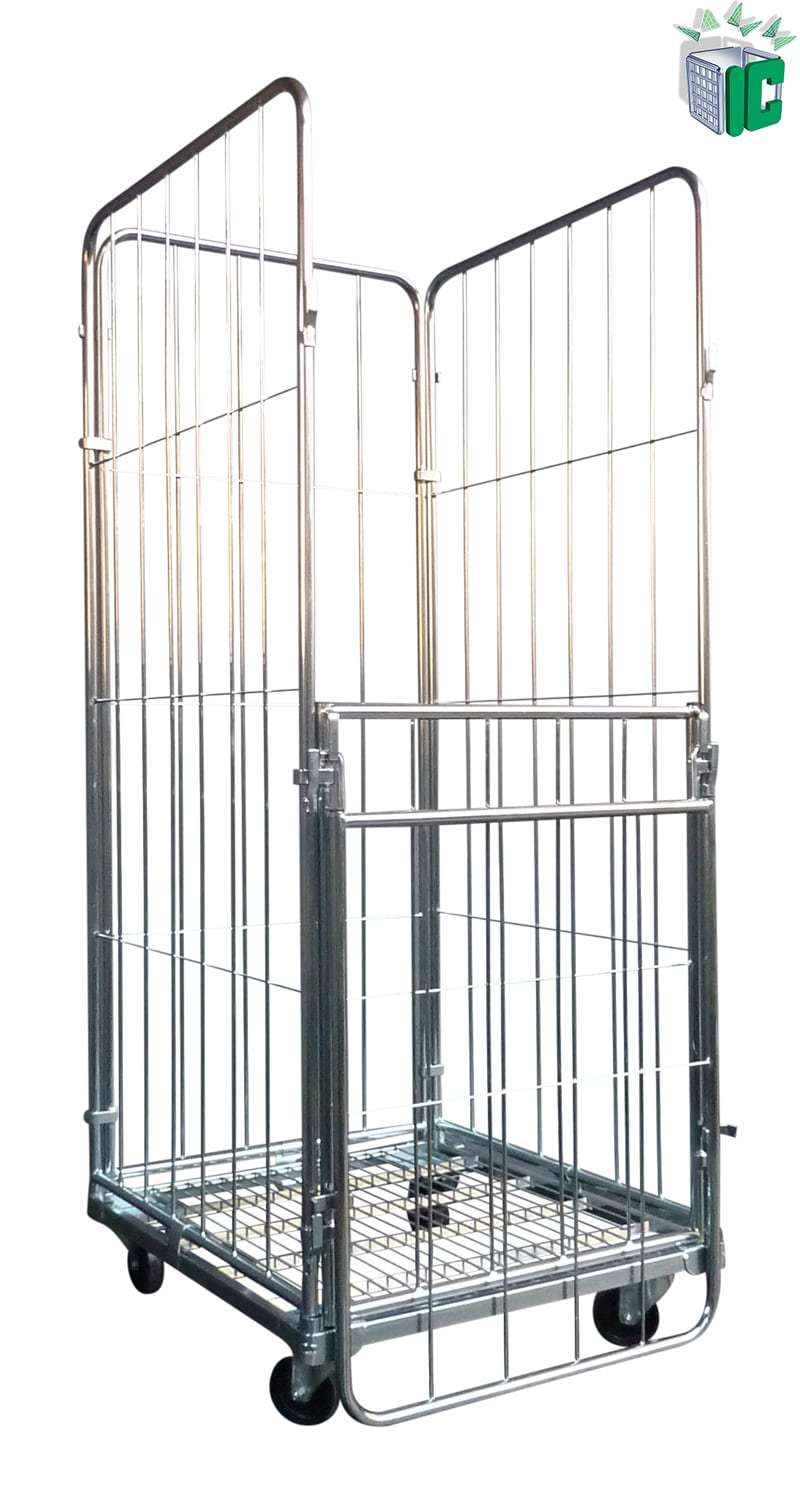
Choosing the right Roll Container depends on the specific needs of each company and the environment in which it will be used. From small and compact versions, ideal for tight spaces such as pharmacies and healthcare facilities, to standard Roll Containers, perfect for optimizing space in trucks, to MAXI and JUMBO models intended for bulky loads in large warehouses and logistics centers. In this section we will explore the features and benefits of each solution, helping you identify the most suitable model for efficient and safe logistics management starting with size.
Load capacity and wheels
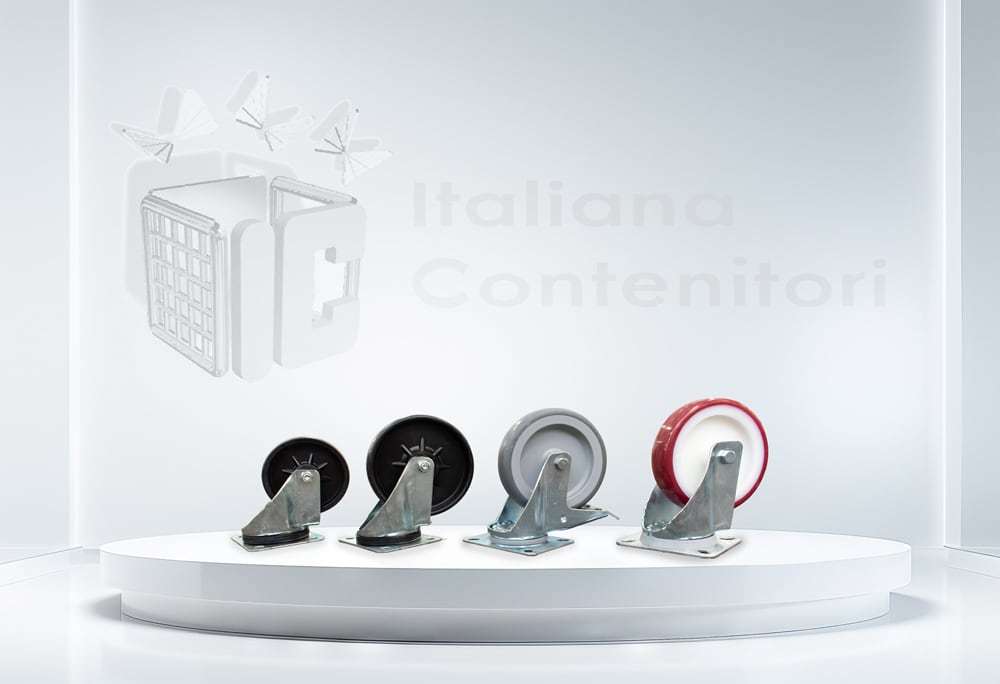
The load capacity of a Roll Container is closely related to the quality and type of wheels used. The wheels not only determine how much weight can be transported, but also influence ease of movement, stability and safety during handling operations. To meet different usage needs, Italiana Contenitori offers four different Roll Container wheel kits, each designed to meet specific operational needs, ranging from noise reduction to use on uneven surfaces or for particularly heavy loads.
Standard Wheel Kit
Equipped with polypropylene wheels, the Standard Kit offers a maximum load capacity of 400 kg. It is the most economical and versatile choice, ideal for everyday use on smooth surfaces inside warehouses or stores.
Silent Wheel Kit
With gray elastic rubber wheels, this kit is perfect for environments where silence is critical, such as hospitals and nursing homes. The maximum load capacity is 400 kg, combining smooth movement with noise reduction.
Intenso Wheel Kit
Designed for heavy-duty use, it uses nylon wheels that offer wear resistance even on the most demanding surfaces. Maximum load capacity is 400 kg, ideal for industrial applications and warehouses with high traffic.
Strong Kit
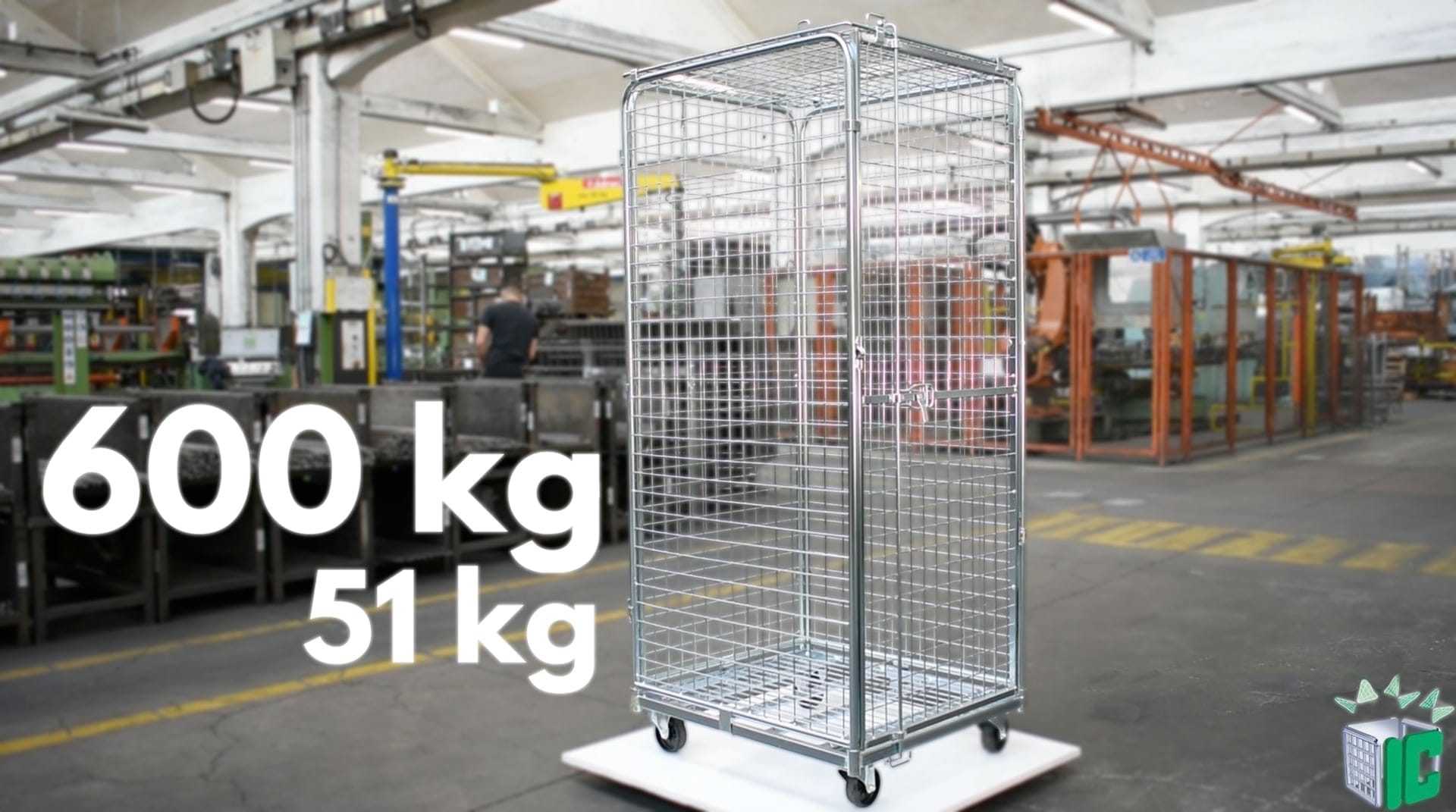
The best choice for heavy loads, with nylon polyurethane wheels. The Forte Kit supports up to 600 kg, ensuring sturdiness and stability even on uneven surfaces and under severe working conditions.
Number of sides: 2 to 4 with door and folding door
The configuration of the sides of a Roll Container plays a crucial role in the efficiency and safety of cargo transportation. Depending on the type of cargo, there is a choice of 2-, 3-, or 4-sided Roll Containers, each with specific advantages for different applications. The choice of the number of tailgates not only determines the level of cargo containment, but also affects accessibility, ease of loading and unloading, and protection of items during handling.
Mesh width: protection of small or valuable goods
The choice between dense mesh and standard mesh in Roll Containers depends mainly on the nature of the cargo and the level of protection required. Dense mesh is used to store and transport small or valuable goods that require additional protection, preventing items from slipping or being damaged during transport. This type of structure is particularly suitable for pharmaceuticals, electronic component transportation, and retail of valuable items, and provides additional security and cargo integrity.
In contrast, Roll Containers with standard mesh are ideal for handling less delicate products, such as commonly used goods and items, industrial artifacts, and waste or scrap, for which no special protection is needed.
Vacuum space management: Roll Containers that can be interpenetrated or bottled
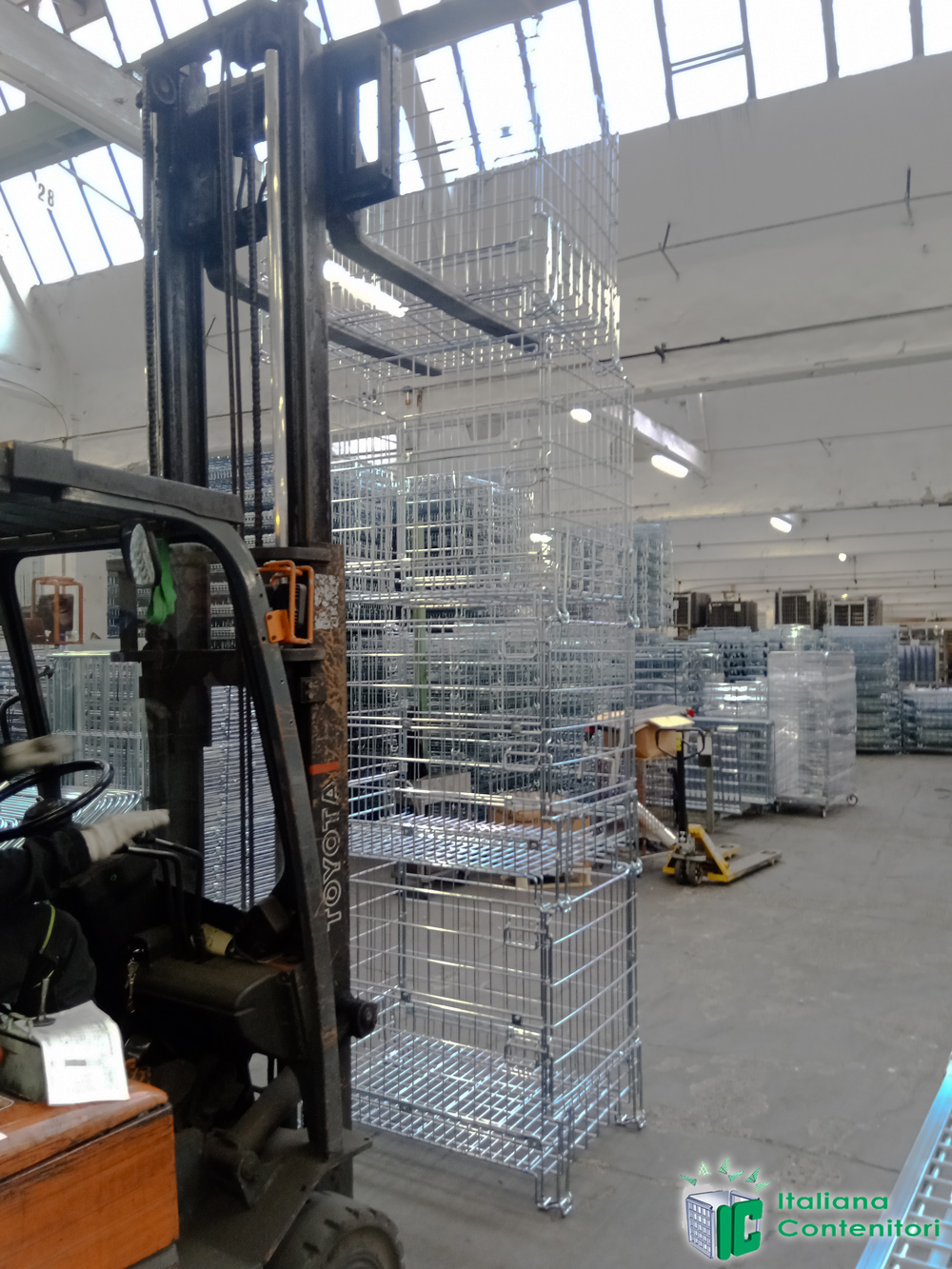
Roll Containers that can be interpenetrated or bottled are designed to optimize space in warehouses when not in use, a significant space-saving advantage over traditional models. Intelligent design allows empty Roll Containers to fit inside each other, dramatically reducing clutter at idle times and improving operational efficiency in environments where space is limited.
These models, widely used in logistics and large-scale distribution, allow large quantities of empty Roll Containers to be stored while occupying only a fraction of the space that would be needed. Roll Containers can reduce the empty footprint by up to 75%, thus optimizing storage and handling operations, and also facilitating transportation by truck or in small warehouse areas.
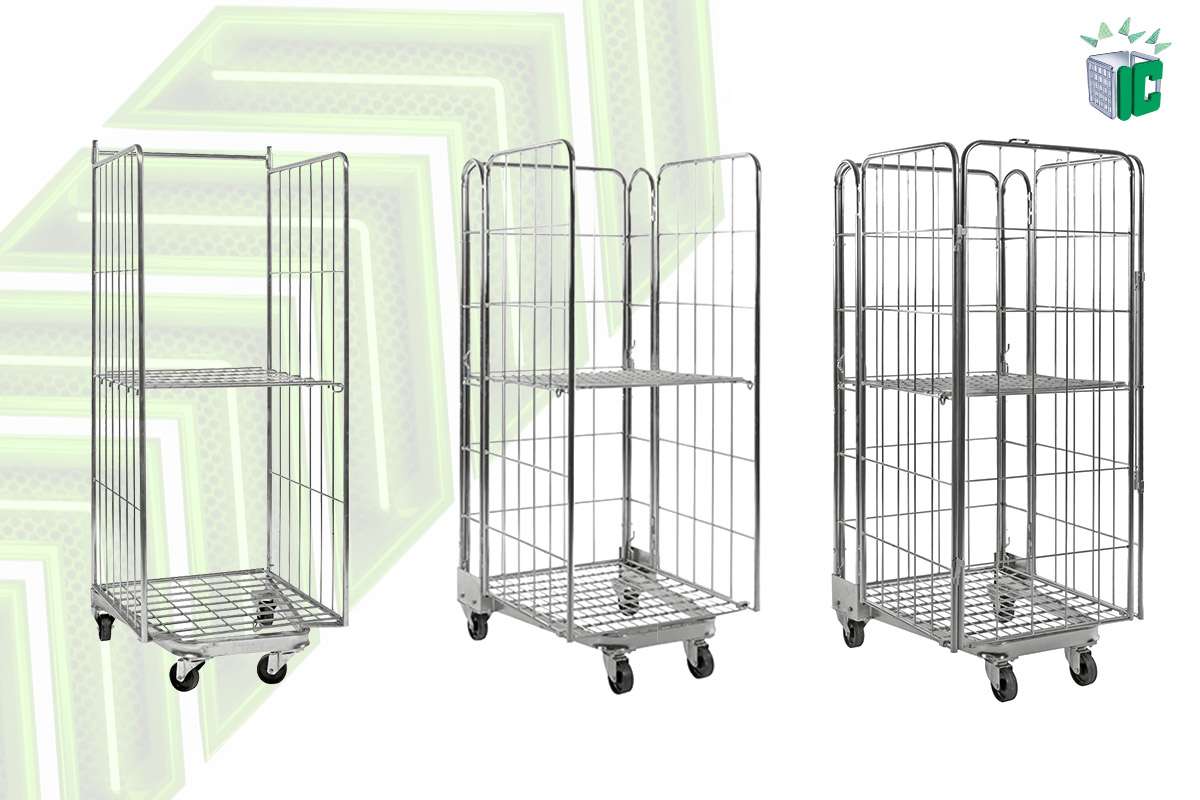
Roll Containers are ideal for companies that operate with large handling volumes, such as in large-scale retail trade, distribution warehouses or logistics centers. In addition to their ability to optimize space, they are also easy to maneuver, and provide a significant reduction in operating costs due to the ease with which they are handled and stored.